
Every late shipment and every mispicked order chips away at a brand you spent years building. SKU Distribution delivers 3PL fulfillment services designed around a single principle: an error-free warehouse is the only warehouse worth running.
What We Do
/
3PL Services
3PL Fulfillment Services Built to Eliminate Order Errors
Whether you are engaging a third party logistics provider for the first time or replacing one that is holding you back, the operation flexes to fit the way your business actually works.

Where fulfillment errors actually start, and how we close them.
A late package, or worse, someone else’s package, rarely stays a one-time problem. You lose a customer you spent real money acquiring, and you inherit a support ticket, a return, and a review you can’t delete. SKU brings receiving, storage, order processing, and shipping into one connected operation, so the weak points that usually cause these errors, manual picking without barcode verification, inventory counts that drift from the warehouse floor to your storefront, and systems that don’t talk to each other, get caught before they reach a customer.
Quality control here isn’t a final inspection step bolted onto the end. It’s built into every stage, receiving, storage, order processing, and shipping, with a proprietary process designed to catch discrepancies long before they reach a packing station.
Fulfillment built around how you actually operate.
Warehousing, fulfillment, and distribution aren’t one-size-fits-all here. Every workflow, from how inventory is received and stored to how orders move through picking, packing, and shipping, is configured around your inventory profile, sales channels, and service requirements. As your product mix shifts or your channels expand, the operation adjusts with you instead of forcing your business into a fixed process it was never built for.

Receiving

Warehousing & storage

Order fulfillment

Shipping

Inventory Management

Labeling & compliance

Kitting & value-added services

EDI & system integrations

Transportation coordination
3PL Infrastructure that adapts as you grow.
No two fulfillment operations have the same inventory profile, order mix, or service requirements. SKU designs warehousing and fulfillment workflows around your D2C, retail, and B2B channels, whether that means shared or dedicated capacity, flexible integrations across your existing platforms, or value-added services layered in as needed.
As volume grows and your channel mix shifts, from adding a new marketplace to scaling into wholesale, the operation adapts alongside you instead of locking you into a fixed setup you’ll eventually outgrow.
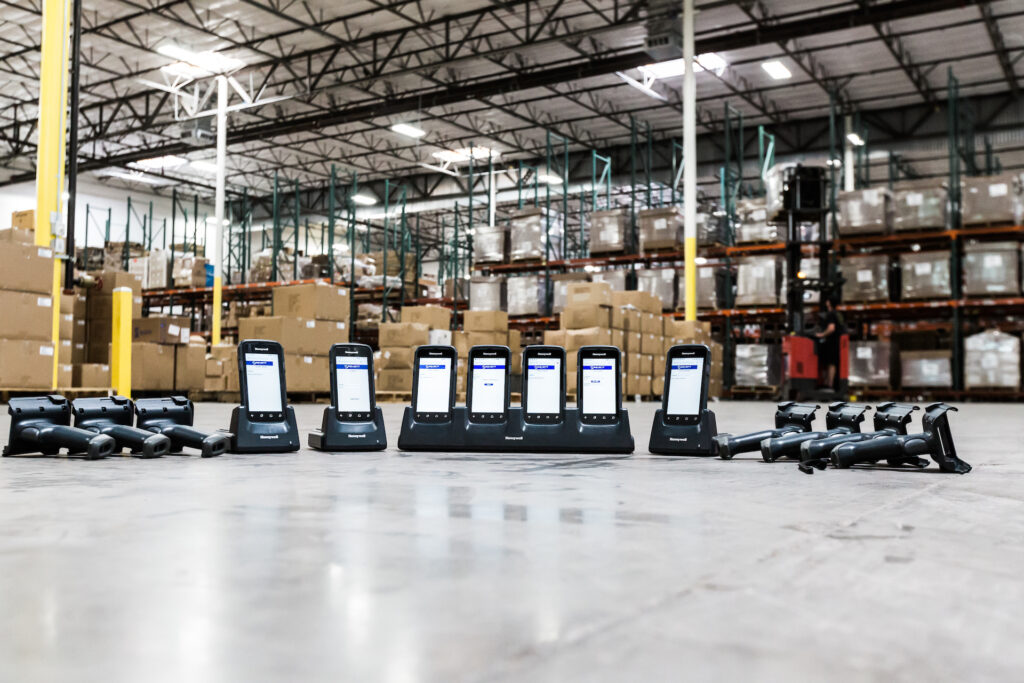
3PL workflows built for accuracy, flexibility and scale.

Warehousing & inventory control
SKU combines receiving, storage, and inventory management with process-driven controls designed to improve visibility and reduce fulfillment errors. Every inventory workflow, from how stock is received and slotted to how it’s counted and tracked, is configured around your specific products, order profile, and service requirements, rather than forced into a generic warehouse setup.

Shared or dedicated operations
Depending on your volume and operational needs, SKU can support shared or dedicated fulfillment workflows across D2C, retail, and B2B orders. EDI, labeling, routing, and compliance requirements can be built directly into the operation, so retail-ready execution isn’t a separate process bolted on afterward, it’s part of how the account is set up from day one.

Flexible capacity & value-added services
As inventory and order volume change, SKU can adapt storage, labor, and fulfillment workflows without forcing your business into a one-size-fits-all model. Kitting, labeling, assembly, repackaging, and other value-added services can be layered around your account requirements, scaling up or down as your product mix and channel needs evolve.

Fulfillment accuracy & exception management
Late, incorrect, or incomplete orders create customer-service problems fast, and they’re rarely caught until a customer is already frustrated. SKU uses scan-driven workflows, inventory controls, and operational visibility to catch exceptions earlier in the process, keeping fulfillment activity moving accurately through the warehouse instead of surfacing as a problem after the fact.

Connected systems & integrations
SKU connects ecommerce platforms, marketplaces, EDI, and business systems so orders and inventory move through the fulfillment operation with fewer manual handoffs. These integrations are built to improve visibility, reduce duplicate data entry, and support more consistent execution as volume grows and new sales channels get added.

Order cutoffs & returns management
SKU supports same-day fulfillment based on agreed order cutoff times, carrier schedules, and service requirements, giving your team a predictable window to work within. Returns are received, inspected, and routed according to your business rules, whether that’s restocking, quarantine, refurbishment, or another defined disposition, so sellable inventory gets back into circulation quickly instead of sitting unprocessed.
Frequently asked questions
Everything you need to know about working with SKU Distribution, from onboarding to shipping cutoffs.
Third party logistics is the practice of outsourcing warehousing, order fulfillment, and distribution to a specialist provider instead of running those functions in house. The provider receives and stores your inventory, processes orders as they come in, ships to your customers or retail partners, and handles returns. You keep control of the product, the pricing, and the brand experience. The provider absorbs the space, labor, systems, and expertise required to move it accurately at volume.
A 3PL company is the partner that performs that work on your behalf. Scope varies widely: some handle storage and shipping only, while others add kitting, labeling, EDI compliance, transportation management, and reverse logistics. Among third party logistics companies, the distinction that matters most in practice is whether the provider can hold accuracy at your order volume and integrate cleanly with the systems you already run.
Common examples include ecommerce fulfillment for direct-to-consumer brands, direct-to-retail replenishment on EDI, shared warehousing for a company testing a new region, dedicated operations for high volume programs, kitting and subscription assembly, and returns processing. Freight forwarding and transportation management also sit under the 3PL umbrella when a provider manages movement between facilities. Most growing businesses use a combination rather than one service in isolation.
As seen in