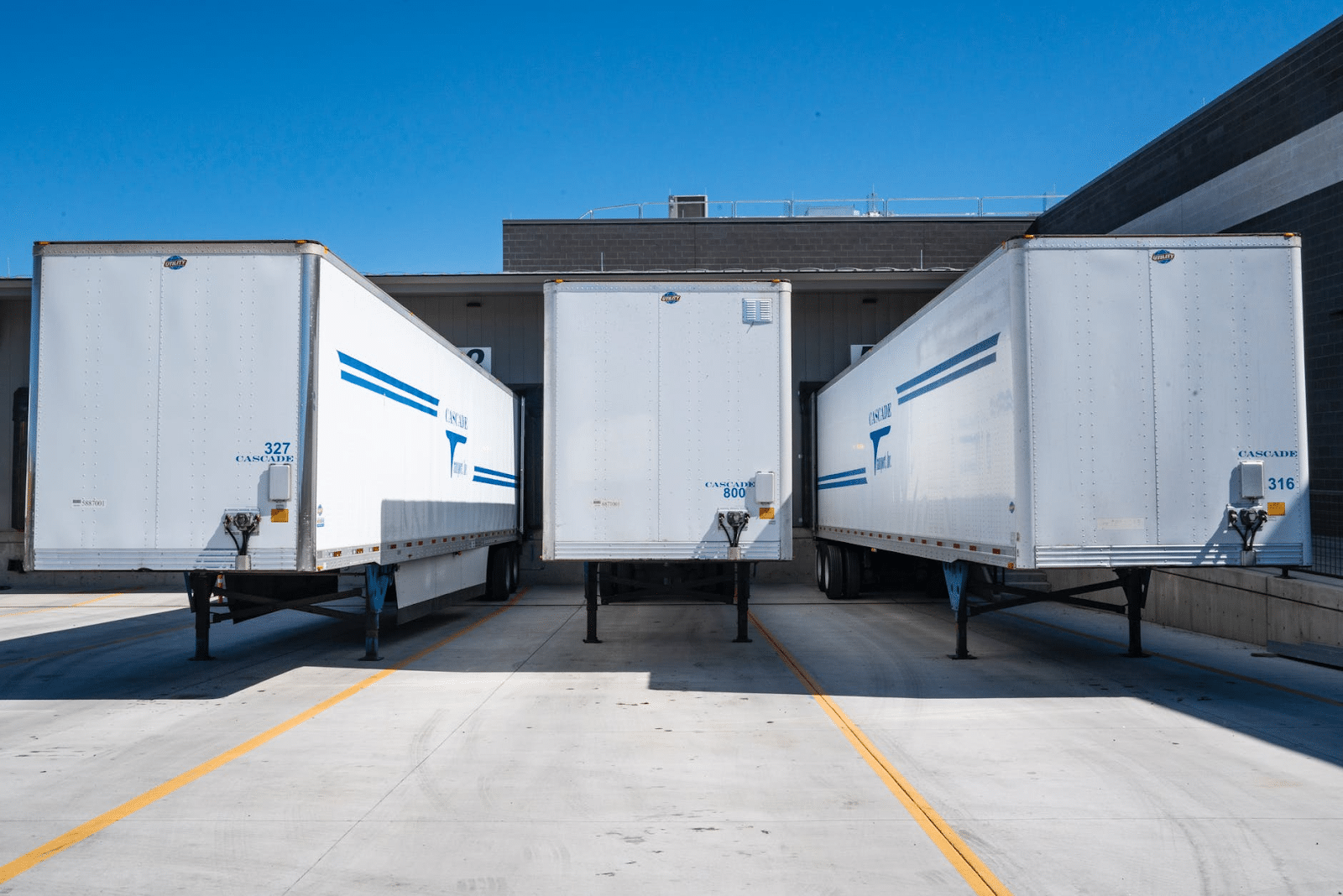
SKU configures least-cost carrier groups around each client’s requirements and rate-shops every order based on package weight, dimensions and destination. Orders are automatically evaluated across eligible ecommerce shipping services – including carriers such as USPS, FedEx, DHL eCommerce, OSM, UniUni and others – to select the lowest-cost qualifying service for that shipment. That gives brands a consistent way to control parcel costs without manually comparing carriers order by order.
Pricing
Tell us how you ship.
We’ll build your fulfillment pricing.
No published rate card, because no two fulfillment operations cost the same. Answer a few questions about your order volume, sales channels and service needs, and our team will build pricing around your actual operation — usually within one business day.
PRICING BUILT AROUND YOUR OPERATION
12-MONTH MINIMUM AGREEMENT
Quote in 1 business day
Build your quote
Four questions about your volume, then where to send it.
No obligation · We never share your details
What goes into your fulfillment pricing
Your fulfillment cost depends on how inventory arrives, how much space it requires, how orders are picked and packed, where those orders ship, and any additional services your operation needs. We price those variables around your actual order profile instead of averaging you into a generic tier.
Rate-shopped shipping

Receiving & Returns
Receiving and returns are priced around the work involved — including inbound handling, units or pallets received, inspection requirements, and the steps required to process returned inventory. Your quote reflects the workflows your products actually require.
Frequently asked questions
Everything you need to know about working with SKU Distribution, from onboarding to shipping cutoffs.
SKU Distribution works with growing ecommerce brands, manufacturers, importers, wholesalers and established businesses that need reliable fulfillment across D2C, retail and B2B channels. We are especially well suited for companies whose order volume, channel complexity or inventory requirements have outgrown a manual or one-size-fits-all fulfillment solution.
Onboarding depends on your SKU count, inventory volume, integrations and operational requirements. Before launch, our team maps receiving, inventory setup, order workflows, shipping rules and system integrations so both teams know exactly how the transition will work. For straightforward accounts, onboarding can move quickly; more complex operations are planned around a defined implementation timeline.
SKU integrates with major ecommerce platforms, marketplaces and business systems, including Shopify, WooCommerce, NetSuite, SAP, Amazon and other leading platforms. We also support ERP, EDI and custom integration workflows. During onboarding, we review your technology stack and determine the best integration path for orders, inventory, shipping and reporting.
SKU Distribution operates fulfillment and warehousing facilities in Arizona’s Phoenix metropolitan area. Our location provides access to major Western U.S. markets, national parcel and freight networks, and international transportation routes while also supporting Foreign-Trade Zone operations for qualifying imported inventory.
Eligible imported goods can enter an activated Foreign-Trade Zone without immediately triggering U.S. duties. Duties are generally deferred until merchandise leaves the zone and enters U.S. commerce, helping businesses preserve cash while inventory is stored. Qualifying imported goods that are later re-exported can also avoid U.S. duties.
Returns are processed according to your business rules. SKU can receive, inspect and route returned inventory for restocking, quarantine, refurbishment or another defined disposition. The goal is to give your team visibility into returned inventory while getting sellable products back into available stock quickly.
SKU supports same-day fulfillment based on agreed order cutoff times, service requirements and carrier schedules. Cutoff times are established during onboarding so your team has a clear operating standard for when orders must be received to qualify for same-day processing. Typical cutoff time is 1PM for same-day fulfillment.
Fulfillment pricing is built around the actual requirements of your operation, including monthly order volume, SKU count, receiving, storage, pick-and-pack activity, shipping profile and any value-added services. We price around how your business actually operates rather than forcing every client into the same package. Pricing is very transparent without hidden fees.
Yes. SKU can support D2C, retail, wholesale and B2B fulfillment from a shared inventory operation, helping businesses avoid unnecessary inventory silos while supporting the different workflows, labeling, EDI and shipping requirements of each sales channel.
Yes. Moving inventory from an existing 3PL requires careful planning around inventory reconciliation, integrations, receiving schedules and order continuity. SKU works with your team to build a transition plan designed to minimize disruption while inventory and order flows move into the new operation.