
At first encounter, fulfillment could easily sound like one job: get the product where it needs to go. Walk the warehouse floor, though, and you will find two different worlds running side by side.
In one, a single jar of face cream is picked, packed, and on a doorstep by tomorrow evening. In the other, forty cases of that same cream ride a pallet toward a retailer’s distribution center, labeled to spec and booked into a delivery window that cannot slip.
If you run an established brand, you likely live in both worlds, and that is why the B2C vs B2B fulfillment question matters more than it seems at first glance: it shapes your cost structure, your customer experience, and which 3PL you can trust. In this article, we will discover how the two models differ and why B2C is probably the harder discipline.
TL;DR
- B2C fulfillment means thousands of small orders shipped fast, with the parcel as your brand’s only physical touchpoint.
- B2B fulfillment means bulk orders, pallets, EDI, and strict retailer compliance, where one mistake triggers a chargeback.
- B2C is considered difficult because of relentless volume, consumer speed expectations, packing bottlenecks, and returns.
- Most growing brands need both channels, so the real question is which 3PL can run B2B and B2C from one inventory pool.
B2B vs B2C Fulfillment: What Do We Mean By That?
B2C (or D2C) fulfillment is the business of picking, packing, and shipping individual orders directly to the end consumer: one customer, one parcel, expected to arrive fast and look professional. B2B fulfillment moves goods in bulk to another business, whether a retailer, a wholesaler, or a distribution center. It entails fewer orders, far larger quantities, and a different definition of success.
The distinction goes deeper than who receives the box(es): each model demands its own picking logic, packaging, paperwork, and technology, which is why order fulfillment providers tend to specialize in one or the other.
B2B Fulfillment vs B2C Fulfillment: Their Basic Differences
The contrast shows up everywhere on the warehouse floor. These are the differences with the biggest impact on what you pay and on the experience your customers receive.
Order profile and volume
A B2C operation processes thousands of small orders every day, each picked and packed individually. A B2B operation handles fewer orders at much greater scale: cases and pallets moving on regular replenishment cycles.
Speed and expectations
Consumers now treat next-day delivery as the baseline, and a slow shipment reflects on your brand, not on your 3PL. B2B works on longer lead times but far stricter windows. A retailer’s delivery appointment is a commitment, and arriving early can cost you as much as arriving late.
Packaging and the unboxing moment
In B2C, the parcel is the only physical interaction your customer ever has with your brand. The first impression is decided the moment the box is opened. Plus, every inch of wasted box is dimensional weight you pay for.
B2B packaging, by contrast, is standardized and functional: case labels, pallet configurations, and carton markings built to the buyer’s exact specification.
Compliance, paperwork, and EDI
Here is where B2B hides its real difficulty. Retailers enforce routing guides, advance shipping notices, and labeling standards for anyone who wants to sell into them, and they issue chargebacks when a vendor gets them wrong.
Most large buyers also require EDI, the electronic exchange of orders and shipping documents; GS1, the not-for-profit standards organization, traces EDI’s roots to the cargo manifests of the 1948 Berlin Airlift.
At SKU Distribution, our 3PL services include retail-ready distribution with EDI, and we ship to retailers like REI and Backcountry every week.
Shipping methods and cost structure
B2C runs on parcel carriers, rate shopping, and zone-based pricing, so the economics are measured per order. B2B is based on less-than-truckload (LTL) and full-truckload (FTL) freight with scheduled appointments, which means that costs are calculated per shipment and per pallet position.
Returns
Returns are simply part of consumer life. Shoppers often order two sizes to keep one and expect the send-back to be as effortless as the purchase, making reverse logistics a core B2C process, not an afterthought. B2B returns are rarer but heavier: a rejected pallet or a compliance chargeback hurts far more per incident.
Why Is Order Fulfillment In B2C Considered Difficult?
B2C fulfillment is often considered difficult by industry people because it combines relentless volume, unforgiving speed expectations, and zero tolerance for error at consumer scale. A 1% picking error rate sounds small until it means dozens of disappointed customers every day. Add seasonal spikes, packaging that doubles as brand experience, and a steady stream of returns, and you have the most demanding discipline in logistics.
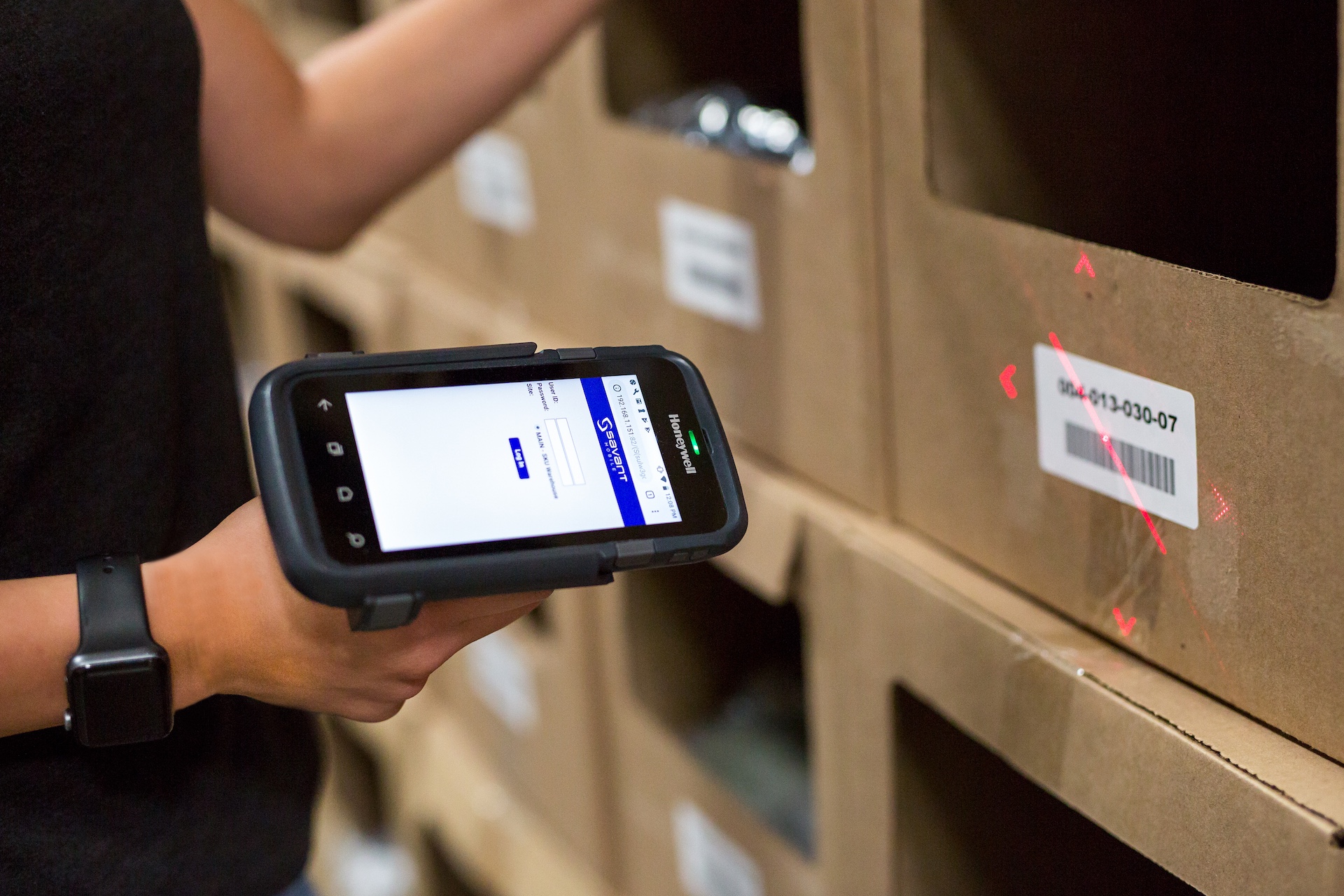
There is also a structural constraint most brands never see: in almost every warehouse, the bottleneck is not picking but packing, which typically needs about two packers per picker. In our case, we managed to solve that constraint by investing roughly $750,000 in packing automation that right-sizes boxes at around 500 units per hour and forms sealed, labeled bubble mailers at around 900 per hour. That is how our ecommerce fulfillment operation ships in-stock orders within 24 hours at 99 percent fulfillment accuracy, even when your volume triples.
Do You Really Have to Choose? Most Brands Need Both
The two models sound like separate worlds, yet most established brands live in both at once: you sell D2C through your webstore, then a retail buyer comes calling. Splitting those channels across two 3PLs would mean duplicated safety stock, two systems to reconcile, and two points of failure. One inventory pool serving both channels under one roof is the operationally sane answer, provided your partner masters both disciplines and both channels feed a single real-time inventory view through solid integrations with your platforms and ERPs, including NetSuite and SAP.
For international manufacturers, there is one more layer: entering the US through a Foreign Trade Zone lets you defer duties while serving both channels from the same American base. Under a program created by Congress in 1934, US Customs and Border Protection treats these zones as outside US customs territory for duty purposes, so nothing is owed until goods leave the zone for the domestic market.
How We Handle Both Kinds of Fulfillment Under One Roof
When we created SKU Distribution, our intention was to remove this trade-off. From our Chandler, Arizona operation, we run high-volume D2C picking, packing, and shipping alongside retail-ready B2B distribution with full EDI, all from one inventory pool with real-time visibility.
As the first FTZ-approved 3PL in Arizona and a two-time Inc. 5000 company, we have invested for what is coming rather than trying to get you in the door and charge for everything after.
If you are weighing how to handle both channels, we will be more than happy to walk you through it. Contact us for more information or to get a price when you are ready. You make the promises; we fulfill them.
FAQ
What is the main difference between B2C and B2B fulfillment?
B2C fulfillment ships small individual orders directly to consumers, while B2B fulfillment ships bulk quantities to businesses and retailers. They also differ in speed expectations, packaging, shipping methods, compliance, and returns.
Why is order fulfillment in B2C considered difficult?
Because it pairs huge order volume with consumer-grade expectations: fast shipping, perfect accuracy, professional packaging, and easy returns. Small error rates multiply across thousands of daily orders, and packing capacity is usually the hidden bottleneck.
Can one 3PL handle both B2B fulfillment and B2C fulfillment?
Yes, but only with genuine capability on both sides: packing automation and speed for the consumer channel, plus EDI, retailer compliance, and freight experience for the business channel. Ask for proof of both before signing.
What is EDI and why does it matter in B2B fulfillment?
EDI (electronic data interchange) is the standardized electronic exchange of purchase orders, shipping notices, and invoices between a supplier and a retailer. Most major retailers require it, and errors typically result in chargebacks.