If you’re in e-commerce or importing goods into the US, you’ve probably heard the terms warehouse vs fulfillment center. Most assume they’re the same—they’re not. Understanding the difference could save your company thousands of dollars annually and significantly improve customer satisfaction.

Warehouse, distribution center, fulfillment center. The terms get used interchangeably, but each facility is built for a different job, and choosing the wrong one costs money and customer loyalty. The fulfillment center vs. distribution center question gets sharper as your volume grows, and sharper still when you import, because a Foreign Trade Zone changes the math. Here is how the three compare, and how to tell which one your inventory actually needs.
TL;DR
- A warehouse stores inventory long term, with the goal of maximizing space at the lowest cost.
- A distribution center moves inventory in bulk to retailers, wholesalers, and other businesses, usually by the pallet or case.
- A fulfillment center ships individual orders straight to end customers, typically within 24 to 48 hours.
- The core question: is your inventory sitting, moving in bulk, or shipping one order at a time?
- Many brands need all three functions, which is why a 3PL that combines them under one roof, inside a Foreign Trade Zone, often wins on cost and speed.
What Is a Warehouse, a Distribution Center, and a Fulfillment Center?
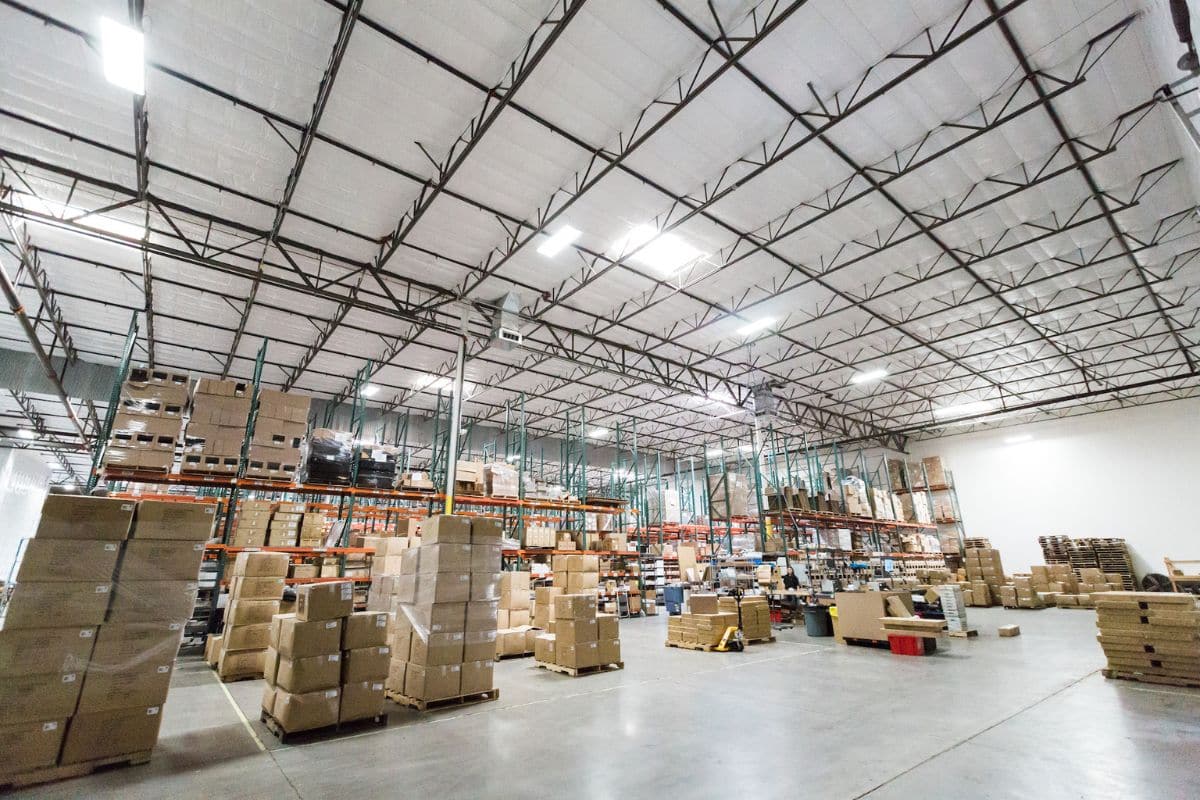
A warehouse is fundamentally a storage facility designed for long-term inventory holding and bulk storage. It maximizes cubic footage for cost efficiency, and products may sit for weeks or months before they move. Staffing centers on inventory managers and forklift operators rather than order pickers.
A distribution center is built to keep goods flowing to other businesses. So what is a distribution center in practice? It receives inventory in bulk, holds it briefly, and ships it out by the pallet or case to retail stores, wholesalers, or other facilities, often using cross-docking to keep dwell time short. Throughput matters more than storage density.
A fulfillment center is built for movement at the single-order level. It receives orders, picks items from inventory, packs them, and ships them to customers, ideally within 24 to 48 hours. It prioritizes speed and accuracy over pure storage capacity, and it handles the returns that come back.
Fulfillment Center vs. Distribution Center: Key Differences Side by Side
The difference between fulfillment and distribution center operations comes down to who receives the shipment and how big it is. Warehouses add a third reference point: storage with minimal movement. Here is how the three compare across the factors that drive cost and service.
Warehouse
- Primary job: Long-term storage
- Who receives it: Your own operation, later
- Order size: Pallets in, pallets out
- Inventory turnover: Slow, weeks to months
- Speed target: Not time-critical
- Staffing: Inventory managers, forklift operators
- Technology: Inventory tracking software
- Customer impact: Invisible to buyers
Distribution Center
- Primary job: Bulk movement to businesses
- Who receives it: Retailers, wholesalers, other facilities
- Order size: Pallets and cases
- Inventory turnover: Fast, often cross-docked
- Speed target: Scheduled delivery windows
- Staffing: Receiving, staging, and shipping teams
- Technology: WMS plus EDI with retail partners
- Customer impact: Shapes retailer scorecards
Fulfillment Center
- Primary job: Single orders to end customers
- Who receives it: Individual shoppers
- Order size: Units and parcels
- Inventory turnover: Fastest, daily picking
- Speed target: Typically 24 to 48 hours
- Staffing: Pickers, packers, shipping specialists
- Technology: Order management synced to sales channels
- Customer impact: Directly shapes the customer experience
In short, distribution centers serve businesses, fulfillment centers serve shoppers, and warehouses serve the balance sheet.
When Does a Distribution Center Beat a Warehouse?
The distribution center vs. warehouse decision usually comes down to how often your stock needs to leave. If you hold seasonal inventory or raw materials for months, a warehouse keeps costs low. If you ship cases and pallets to retailers every week, storage-first racking slows you down and adds handling.
A distribution center is the better fit when you:
- Replenish retail stores or a retailer’s distribution network on a regular schedule, which is the heart of retail fulfillment.
- Must follow routing guides, carton labeling rules, and delivery appointment windows set by your buyers.
- Exchange purchase orders and advance ship notices with trading partners through EDI.
- Use cross-docking to move inbound freight straight to outbound trucks without putting it away.
- Consolidate goods from several suppliers or factories before they head to customers.
Ship Faster and Keep Customers With the Right Fulfillment Setup
The warehouse vs. fulfillment center choice is where ecommerce brands feel the cost most directly. E-retailers storing inventory in traditional warehouses without fulfillment infrastructure face delays and higher costs. Inventory sits in racks optimized for storage, not picking, and shipping takes days instead of hours.
A fulfillment center fixes that with layouts organized for accessibility, order management systems that pull orders straight from your store, and teams trained for single-unit speed. That is the model behind our DTC fulfillment services, where accuracy and fast turnaround protect the customer experience your brand depends on.
Product type matters, too. Categories like hair care products call for lot tracking, careful packing for liquids, and quick replenishment of best sellers, all of which favor a fulfillment-first operation over a storage-first one.
The FTZ Advantage of Combining Distribution and Fulfillment Centers
Most growing brands do not need just one facility type. They need storage for overstock, distribution for retail and wholesale orders, and fulfillment for direct shoppers. Running distribution and fulfillment centers as separate operations means split inventory, extra freight between buildings, and two sets of systems to reconcile. A partner that does all three inside a Foreign Trade Zone changes the math:
- Deferred duties. When inventory sits within an FTZ, customs duties and taxes are deferred until products leave the zone for domestic consumption. For importers, you only pay when goods head to your customer, which frees up cash flow.
- 99.8 percent accuracy. Fewer errors mean fewer complaints, returns, and chargebacks, whether the order is one unit or one pallet.
- One inventory pool. Retail, wholesale, and direct orders draw from the same stock, with real-time visibility across every channel.
- Room to flex. Space and labor scale up for peak season and consolidate during slower months.
SKU Distribution was the first 3PL warehouse in Arizona to earn Foreign Trade Zone designation, and we run storage, distribution, and fulfillment from Chandler, in the Phoenix metro. Our philosophy is simple: you make the promises, and we fulfill them.
Contact SKU Distribution today to discuss how our FTZ status and fulfillment expertise can improve your margins and accelerate your growth.
Contact SKU Distribution today to discuss how our FTZ status and fulfillment expertise can improve your margins and accelerate your growth.
Frequently Asked Questions
What is a fulfillment center?
A fulfillment center is a facility that stores inventory and processes individual customer orders: receiving, picking, packing, shipping, and returns. It is built for speed and accuracy, with most orders shipping within 24 to 48 hours. Ecommerce and DTC brands rely on fulfillment centers to meet customer delivery expectations.
What is a distribution center used for?
A distribution center moves goods in bulk from manufacturers or importers to retailers, wholesalers, and other facilities. It focuses on fast throughput, scheduled deliveries, and compliance with partner requirements. Products usually spend days, not months, inside before shipping out by the pallet or case.
Is a fulfillment center the same as a warehouse?
No. A warehouse is optimized for storing inventory at the lowest cost per square foot, while a fulfillment center is optimized for picking and shipping individual orders quickly. Many modern 3PL facilities combine both functions, using storage zones for overstock and fulfillment zones for daily orders.
How does a Foreign Trade Zone save me money?
In an FTZ, customs duties and taxes are deferred until goods leave the zone for domestic consumption. That improves cash flow and margins, especially for import-heavy businesses. When your 3PL holds FTZ status, those savings apply to your inventory as soon as it arrives.
Can one facility work as both a distribution center and a fulfillment center?
Yes, and for brands selling through several channels it is often the better setup. A combined operation ships pallets to retailers and parcels to shoppers from the same inventory pool, so stock counts stay accurate and nothing moves twice.
How do I know if my current setup is costing me money?
Start with a few honest checks: whether your shipping times match customer expectations, what share of orders ship with errors, how much you pay in duties that could be deferred, and whether you have real-time inventory visibility. A “no” on any of these usually points to lost margin or lost customers.
The difference between a warehouse, a distribution center, and a fulfillment center is not academic. It is financial. The right facility shapes your margins, your customer satisfaction, and your ability to scale, and a Foreign Trade Zone designation adds a cost advantage on top.
As seen in